e

History of Legendary Soviet Cars
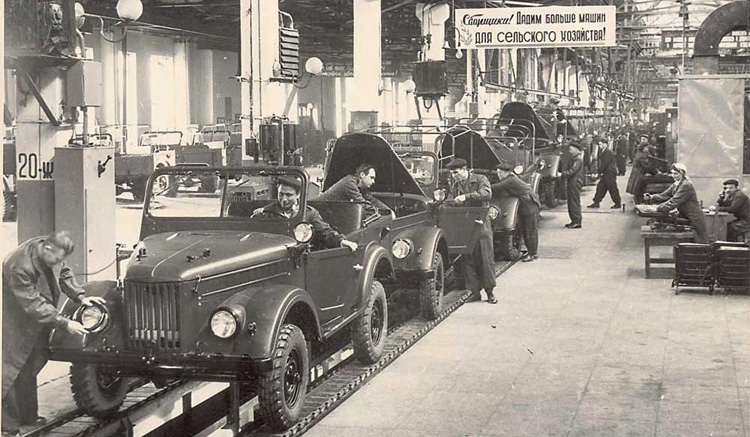
Despite the dominance of high-tech foreign cars of recent generations on modern roads, vehicles of Soviet manufacture continue to be actively used, remaining relevant today. These machines invariably arouse lively interest among a wide range of audiences: older generations find in them a cause for fond nostalgia for a bygone era, while young enthusiasts of vintage vehicles and collectors regard them as valuable objects of technical art. The automotive industry in the Soviet Union had a truly distinctive character and unique charisma. Even in cases where domestic designers relied on advanced foreign concepts and borrowed technical solutions from Western colleagues, they managed to create deeply original models. Moreover, many of these cars later underwent popular grassroots modernization, being refined and adapted by craftsmen to the harsh realities of local use.
The official account of the history of this large-scale industry is commonly dated from 1929, when a momentous cooperation agreement was signed with the American giant Ford Motor Company. That very contract laid the foundation for future mass production.
The first truly mass-produced item to roll off the assembly line in 1932 was the famous GAZ-AA truck. Its design was initially based on the American Ford-AA prototype, but Soviet specialists substantially reworked the project, introducing reinforced components and mechanisms. Over time, through extensive localization and numerous modifications, this truck evolved into a fully independent domestic product. Quite soon engineers moved from copying to implementing their own ambitious ideas. A striking confirmation of this was the ZIS-101 “Sport” car, presented in 1940. This vehicle, with its futuristic design and outstanding performance, was in many respects ahead of its time; only the outbreak of the Great Patriotic War prevented the project from entering further series production.

The GAZ-AA, assembled entirely from Soviet components, was produced from 1933, when it had already received its new name following the factory's renaming to Gorky Automobile Plant. In total, 41,917 vehicles were manufactured.
Quite quickly, Soviet engineers moved from simply copying American models to designing their own vehicles.
Even before the war, the first Soviet sports car prototype—the ZIS-101 Sport—was developed and built; in many engineering and conceptual respects it was ahead of its time. However, its first trial took place in 1940, and thereafter Soviet industry had no capacity for sports cars.

The GAZ-M20 "Pobeda" became a legendary car of its time, the embodiment of the people's feat and the beginning of a new peaceful life. Development of a car for peacetime began as early as 1943, when, after the Battle of Kursk, it became clear that victory in the war was effectively decided.

The technical and technological solutions used in the 1934 American Ford and the 1938 German Opel Kapitän were chosen as the basis. However, it would be wrong to regard the Pobeda as merely a copy of those models — it is more accurate to say that those cars served as inspiration for the development of a new automobile. Incidentally, the car was originally planned to be called Rodina( the Motherland), but the name did not satisfy Stalin himself, who asked for how much they would sell Rodina (the Motherland), and the name was changed.
With the start of serial production the initial flaws and problems became apparent: engine knocking, unreliable door handles and cabin insulation, an ineffective muffler, high fuel consumption, short-lived rear springs, and so on. However, with continued production most of the defects were corrected, and in the 1950s the Pobeda became a trendsetter in world automotive design — it employed a ponton-type body that improved the car’s aerodynamic properties, had an attractive appearance, and soon became popular in both Europe and the United States. In total, nearly 236,000 Pobeda cars were produced from 1946 to 1958.
Another legendary Soviet car is the Volga — the dream of the average Soviet citizen and a marker of high property, social, and nomenklatura status. The Volga was intended to replace the Pobeda as the prestigious Soviet automobile.

Development of the model began in 1953, and serial production of the GAZ-21M "Volga" automobile began in December 1956. It was the first car in the Soviet Union to be fitted with an automatic transmission. In addition, the durability and reliability of the Soviet car’s body were finally determined not by the thickness of the sheet metal, as before, but by thorough priming and treatment with anti-corrosion materials.
These and other advantages led the "Volga" to gain recognition not only at home but also abroad, winning the Grand Prix at the 1958 Brussels Exhibition. In total, from 1956 to 1970, about 640,000 GAZ-21M "Volga" cars were produced.
